When describing Indonesia, people often refer to its nearest neighbors as points of comparison. These include Malaysia, the Philippines, Vietnam, and Thailand. Its two fellow middle-income countries, the Philippines and Thailand, make useful points of comparison because their respective capitals, Manila and Bangkok, are considered “mega-cities” like Jakarta.
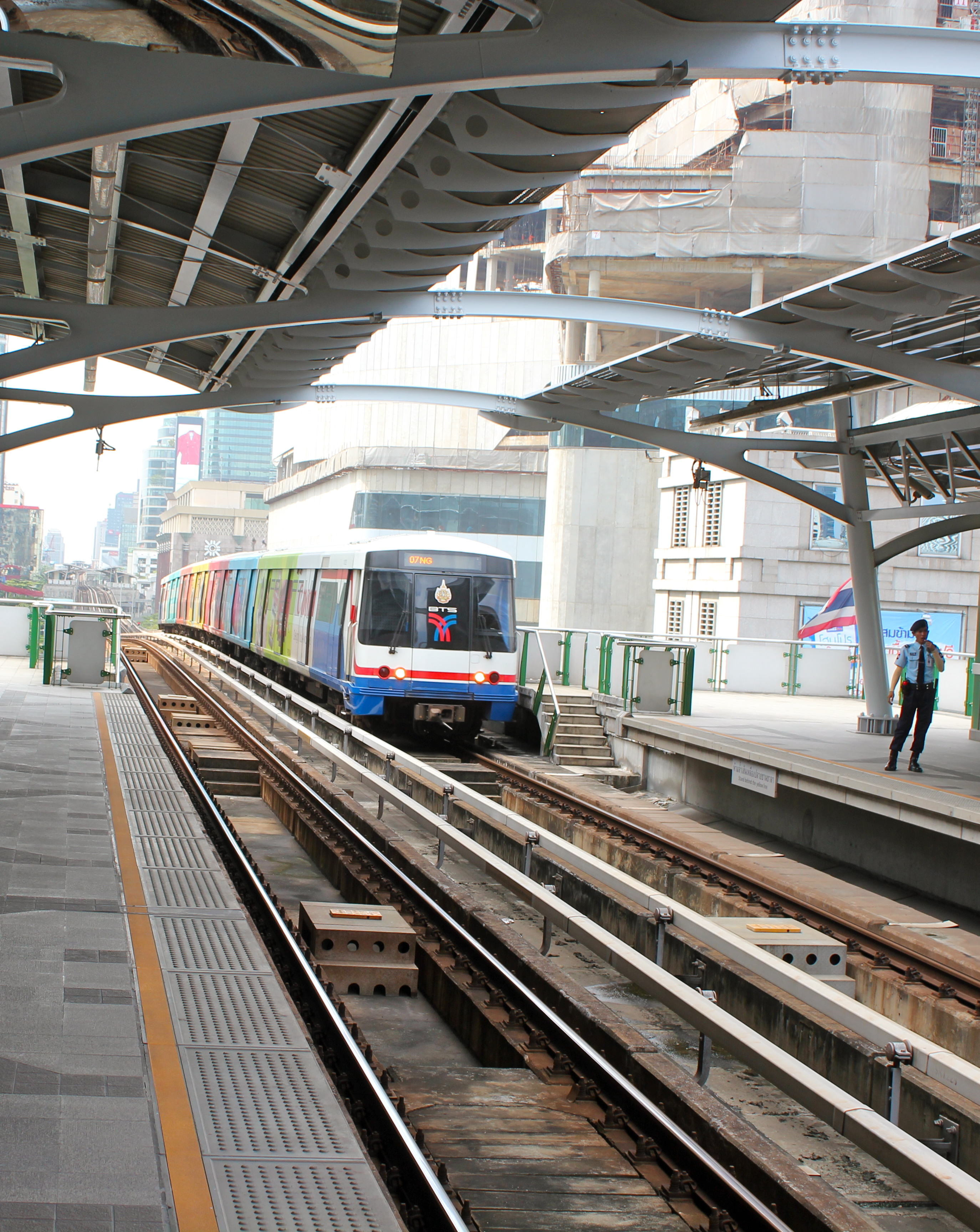
Because I had to spend the past two week in Thailand for work and visa purposes, I’ve been drawing a lot of comparisons between Bangkok and Jakarta. I had barely stepped out of the airport when I declared that I would rather live in Bangkok than Jakarta. In less than a day, though I didn’t have any data to prove it, I felt that this city had a higher quality of life. My early observations were that Bangkok had better public transit; more and better sidewalks; less traffic; lower levels of pollution; more parks; better-preserved cultural history; and a higher tolerance for difference (i.e. homosexuality, ways of dressing in public, etc.). Some of these things are clearly visible, like the Sky Train. Others I just sensed in the air, for example an acceptance of diversity, which is palpable though not easily measured. But was I just thinking the grass was greener in Bangkok?
It turns out the hard data support my early observations. In Numbeo’s quality of life index, Bangkok scored 52.6 and Jakarta minus–13. The index compiles data on pollution, safety, transport/traffic, health care, and costs of living. Bangkok beat Jakarta on all these measures. In fact, of 100 cities ranked worldwide, Jakarta is 4th to last on the list, ahead of only Caracas, Tehran and Manila. In other words, Bangkok has left its two fellow Southeast Asian megacities in the dust (it’s also ahead of Rome, and just behind Buenos Aires). How did it do that? All three of these Asian countries are recent converts to democracy, and all of them suffered through an economic crash in 1997. So what did Bangkok do right?
Of course there are differences that do not boil down to city policy. For example, nationwide, Thailand’s economy has recovered better than others after the Asian financial crisis, with a GDP per capita that is now higher than Indonesia and the Philippines. Bangkok also has fewer people, with a population density about one-third that of Jakarta. Versus.com offers some other interesting insights: Bangkok has more Facebook users than either Manila or Jakarta, an indicator of a better knowledge of the Internet and thus education and global connectivity. They also point out that Bangkok has a higher tolerance of drinking in public. Perhaps both of these increase tolerance for diversity.
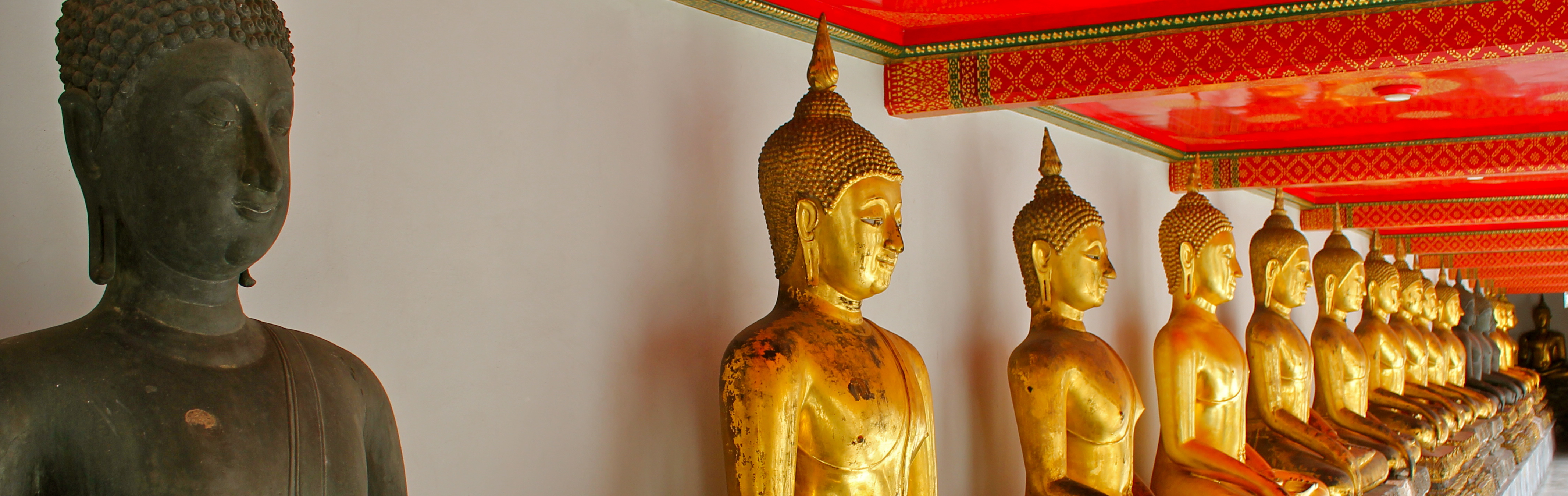
Thailand is a monarchy, and is overwhelmingly Buddhist (religion is also strongly linked to the king). Indonesia is overwhelmingly Muslim; the Philippines is mostly Christian. Religion is easily visible in these capital cities. In Jakarta, the Islamic call to prayer rings out through the city five times a day; Bangkok has temples or shrines on virtually every street corner.
Another interesting vote for Bangkok is its winning of the Travel and Leisure “Best City” award, four years in a row. In one sense, such an award can become a self-fulfilling prophecy: More visitors means more cultural diversity, and a better tourist infrastructure, which makes a city better to visit all around. Still, I think the award hints at one underlying reason for Bangkok’s success. The country has a rich and beautiful culture. Buddhism runs deep in daily life, and it’s linked to worship of the king: Thai people do not pass by even a small shrine on the street without pausing to bow. Perhaps tourism has helped recognize the value of that cultural history, and preserve it.

Having a king might also help Bangkok. Thailand is a constitutional monarchy (like the UK). In 1932, Thais demanded a constitution, and since then, the king has been a figurehead. Political rule has been plagued by coups and conflict, but its monarchy has never been overthrown: The current king has reigned through 17 military coups, creating a stable, benevolent leadership as the country figures out democracy. Thai law states that the king cannot be violated (e.g. criticized, defamed, etc.); he is considered divine. So this strange legal set-up ensures a sort of protection or preservation of national culture and religion. The king also sets a precedent for benevolent leadership: For example, kings have been investing in public medical care in Thailand for centuries. The role of the king in creating public goods translates into public space, like sidewalks.
The Thai view differs dramatically from Indonesian leadership. The dictators of Indonesia had two reasons for disregarding public goods — political and financial. A lack of public spaces helped prevent the public from assembling in opposition. Also, empty (public) space could be developed into a high-rise, a mall, or another road to fill with cars, for profit. Financial interests of politicians and corporations have snagged Jakarta’s plans for a canal and public transit for years.
It’s impossible to point to any one reason for a city’s success. For all their similarities, Bangkok, Manila and Jakarta exist in very different contexts. But it’s clear to me that Jakarta has a few lessons to learn from its mega-neighbor to the north. Public transit and public spaces, such as sidewalks and parks, create a truly valuable difference. Jakarta’s mass transit system — groundbreaking for which started two weeks ago — can’t come soon enough.


 Adventures for the whole family
Leave a comment